The Complete Guide to Raw Himalayan Honey

The Complete Guide to Raw Himalayan Honey

Introduction

Most jars labelled "honey" on Indian shelves aren't quite what they claim to be.

Walk down any supermarket aisle and you'll see "100% pure," "natural," and "organic" printed across dozens of bottles — yet lab tests over the years have repeatedly shown that a large share of commercial honey is diluted, heated, or blended with sugar syrup. If you've ever wondered why your honey never crystallizes, or why two jars marked "pure" taste completely different, you're not alone.

This guide exists to clear that confusion. We'll walk through what raw honey actually is, how it differs from the processed honey most people grew up eating, why honey sourced from the Himalayan region tends to behave differently, and — most importantly — how you can tell if the honey in your kitchen is genuinely raw and pure.

By the end, you'll know exactly what to look for the next time you buy a jar, and where raw Himalayan honey fits into that picture.

Key Takeaways

  • Raw honey is unheated and unfiltered — it retains natural pollen, enzymes, and micro-nutrients.
  • "100% pure" on a label is not the same as "raw." Pure only refers to the absence of added sugar; it says nothing about processing.
  • Himalayan honey often has a distinct floral diversity and mineral profile due to forest-floor foraging at higher altitudes.
  • Crystallization is a sign of purity, not spoilage — raw honey crystallizes faster than heavily processed honey.
  • Organic and raw are two different standards — one is a certification, the other is a processing method.
  • Home purity tests (water test, flame test) are unreliable. Lab testing and sourcing transparency matter more.
  • Honey doesn't expire in the traditional sense, but storage still affects its texture and quality over time.
  • FSSAI compliance and batch-level lab testing are the most credible purity indicators available to Indian consumers today.

What Does "Raw" Actually Mean — and Why Isn't Most Honey Raw?

Raw honey is honey that has been extracted from the comb and bottled without heating, pasteurizing, or fine filtering, so it keeps its natural pollen, enzymes, and micro-nutrients intact.

Most commercial honey goes through heat treatment to make it look smoother, flow faster, and resist crystallization on the shelf. That process is what strips out much of what makes honey "raw" in the first place.

Here's the catch: a label can legally say "100% pure honey" while still being heavily processed. Purity refers to the absence of added sugar or syrup — it says nothing about whether the honey was heated or filtered. That's exactly why so many "pure" honeys behave nothing like raw honey.

Want the full breakdown, including how to read a honey label correctly? See our detailed guide: What Does "Raw" Actually Mean on a Honey Label?

Curious what "raw" really means on a label? Keep reading below.

What's the Difference Between Raw, Processed, and Pasteurized Honey?

Raw honey is minimally handled and unheated; processed honey is filtered and sometimes blended; pasteurized honey is heated to high temperatures to extend shelf appeal, often at the cost of flavor and nutrients.

Type Heated? Filtered? Crystallizes? Nutrient Retention
Raw honey No Minimal Yes, relatively fast High
Processed honey Sometimes Fine-filtered Slower Moderate
Pasteurized honey Yes (high heat) Heavily filtered Rarely Lower

Common myth: "Honey that never crystallizes must be purer."

Reality: The opposite is usually true. Heavy processing removes the natural particles that trigger crystallization, so processed honey often looks more "premium" while actually being less raw.

Read Our Full Comparison Guide : Raw vs Processed vs Pasteurized Honey -->

What Makes Himalayan Honey Different from Other Honey?

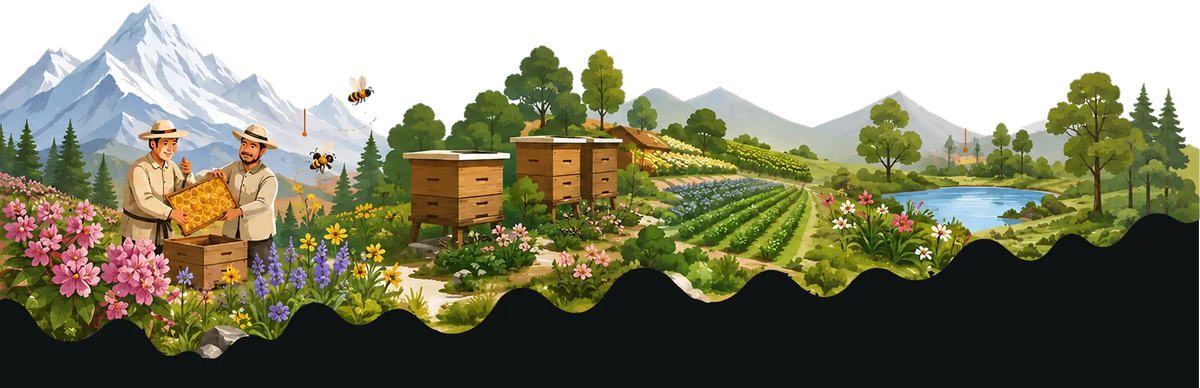
Himalayan honey is shaped by high-altitude forest foraging and floral diversity that isn't available to bees kept near plains or monoculture farmland.

Much like single-origin coffee or wine, honey reflects its terroir. Bees foraging across Himalayan forest belts draw nectar from a wider range of wildflowers, herbs, and forest trees than bees confined to large single-crop farms. This tends to result in:

  • More complex, layered flavor profiles
  • Greater floral and mineral diversity batch to batch
  • Less human interference during foraging, since colonies range across natural forest cover rather than managed monoculture fields

In our experience working with beekeeping partners in these regions, no two harvests taste quite the same — which is itself a signal of natural, minimally interfered sourcing.

How Is Honey Actually Harvested — From Comb to Jar?

Raw honey harvesting involves extracting honeycomb, gently spinning out the honey, and bottling it with little more than a coarse strain to remove wax fragments.

Step-by-step overview:

  1. Beekeepers inspect hives and select combs that are fully capped (a sign the honey is ripe).
  2. Combs are removed and gently uncapped by hand.
  3. Honey is extracted using centrifugal force — not heat or chemical solvents.
  4. It's passed through a coarse strainer to remove wax and debris, while keeping pollen intact.
  5. The honey is bottled directly, without pasteurization.

This is a markedly different path than mass-produced honey, which is often blended across multiple sources and heat-treated to standardize appearance before bottling.

Read Our Full Guide on “How Honey Is Harvested: From Comb to Jar” →

Is Organic Honey the Same as Raw Honey?

No — organic is a certification standard about how bees are kept and what they forage on, while raw is a processing standard about how the honey is handled after extraction.

A honey can be organic-certified and still be heavily processed, just as a honey can be completely raw without holding any organic certification (many small-batch, forest-sourced honeys fall into this category, since formal organic certification is expensive and complex for small producers).

Factor Organic Raw
What it certifies Farming/foraging practices Processing method
Guarantees no heating? No Yes
Requires third-party certification? Yes No formal certification body

How Can You Tell If Your Honey Is Actually Pure?

Most home purity tests are unreliable — the water test and flame test can be fooled by all sorts of substitute syrups, so sourcing transparency and lab verification matter far more.

Pro Tip: Instead of relying on kitchen tests, look for brands that publish batch-level lab reports and disclose their sourcing regions clearly.

Home tests you may have heard of — dropping honey in water to see if it sinks, or trying to light it with a matchstick — are widely considered unreliable by food scientists, since many syrups can be formulated to mimic these behaviors.

What actually matters:

  • Sourcing transparency — does the brand disclose where and how the honey is harvested?
  • Lab testing — has the batch been tested for adulterants like added sugar syrups?
  • FSSAI compliance — does the product meet the compositional standards set for honey in India?

Does Raw Honey Expire or Crystallize?

Raw honey doesn't spoil in any meaningful sense, but it will very likely crystallize over time — and that's a natural process linked to purity, not a sign of spoilage.

Honey is naturally low-moisture and acidic, making it inhospitable to most bacteria. Crystallization happens because honey is a supersaturated sugar solution — glucose gradually separates out of the liquid and forms crystals, especially in raw honey that retains natural pollen particles which "seed" the process.

Myth vs Reality: Myth: Crystallized honey has gone bad. Reality: Crystallized honey is still completely safe to eat — many people prefer its spreadable texture.

Storage tips:

  • Store in a cool, dry place away from direct sunlight
  • Keep the lid tightly sealed
  • Use a clean, dry spoon each time
  • Warm gently in a water bath if you prefer a liquid texture

Related Guide - Does Raw Honey Expire or Crystallize? →

Why Choose Classic Himalayan — and How Is It Different?

In one sentence: Classic Himalayan is sourced directly from Himalayan forest belts through long-term beekeeper partnerships, with no blending, no additives, and batch-level purity testing before bottling.

After everything covered above, the real question is simple: how do you know a brand actually follows through on "raw" and "pure"? Here's how we approach it:

  • Direct sourcing — we work with beekeeping partners across Himalayan forest regions rather than buying from unspecified bulk suppliers.
  • Minimal processing — honey is coarse-strained only, never pasteurized or heat-treated.
  • Batch-level testing — each batch is lab-tested before it reaches the shelf.
  • No blending, no additives — what's in the jar is what came out of the comb.

From hive to bottling, our process is designed to preserve the same natural character described throughout this guide — not to engineer a "prettier," longer-shelf-life product at the cost of what makes raw honey valuable in the first place.

Which Himalayan Honey Is Right for You?

Different Himalayan honey varieties suit different tastes and uses, from mild and floral to bold and medicinal.

  • Black Forest — deep, robust, mineral-rich; great for daily use
  • Multiflora — balanced, classic honey flavor from diverse forest blooms
  • Acacia — light, mild, slow to crystallize
  • Jamun — earthy, slightly tart, popular for its traditional wellness associations
  • Ajwain — pungent, often used for digestive wellness
  • Fennel — subtly sweet with a cooling aftertaste

GOT QUESTIONS?

Frequently Asked Questions

Everything you need to know about our honey, sourcing, ingredients, shipping, and orders is right here. Browse our FAQs to find quick answers. If you still need assistance, our team is always happy to help.

For any additional questions, reach out to us at info@classichimalayan.com .

View More

Raw honey retains more of its natural enzymes, pollen, and micro-nutrients since it isn't heat-treated. Regular processed honey may lose some of these during pasteurization, though both remain a source of natural sugars.

Yes, in normal culinary quantities, for most healthy adults. Portion awareness matters, especially for those managing blood sugar levels.

It doesn't spoil in the traditional sense, though texture changes over time. Honey's low moisture and natural acidity make it highly resistant to spoilage.

Raw honey involves more careful, small-batch harvesting and less mechanized processing, which typically costs more than mass-produced, heat-treated honey.

It's different, not strictly "better" — Himalayan honey often reflects greater floral diversity from forest foraging at altitude, giving it more complex flavor notes, while plains honey may offer more batch-to-batch consistency.

No, a cool, dry place is sufficient and actually better — refrigeration can speed up crystallization.

  • Conclusion

    Raw honey isn't complicated once you know what to look for — it's about how it's handled, not just what's printed on the label. Understanding the difference between raw, processed, and pasteurized honey, knowing that crystallization is a good sign rather than a flaw, and looking past unreliable home tests toward real sourcing transparency will make you a far more confident buyer.

    Himalayan honey, sourced thoughtfully, brings all of this together — natural floral diversity, minimal processing, and a harvesting process that respects what honey is meant to be.